The Bitcoin 2026 Conference did not simply gather an audience—it ignited a movement. Over 40,000 attendees flooded The Venetian Resort in Las Vegas from April 27 to 29, making it the largest Bitcoin event in history. More than 500 speakers took the stage across multiple tracks, and for the first time ever, sitting U.S. regulatory leaders addressed the crowd directly. The energy was electric. The message was clear: Bitcoin has arrived at the center of the global financial system.
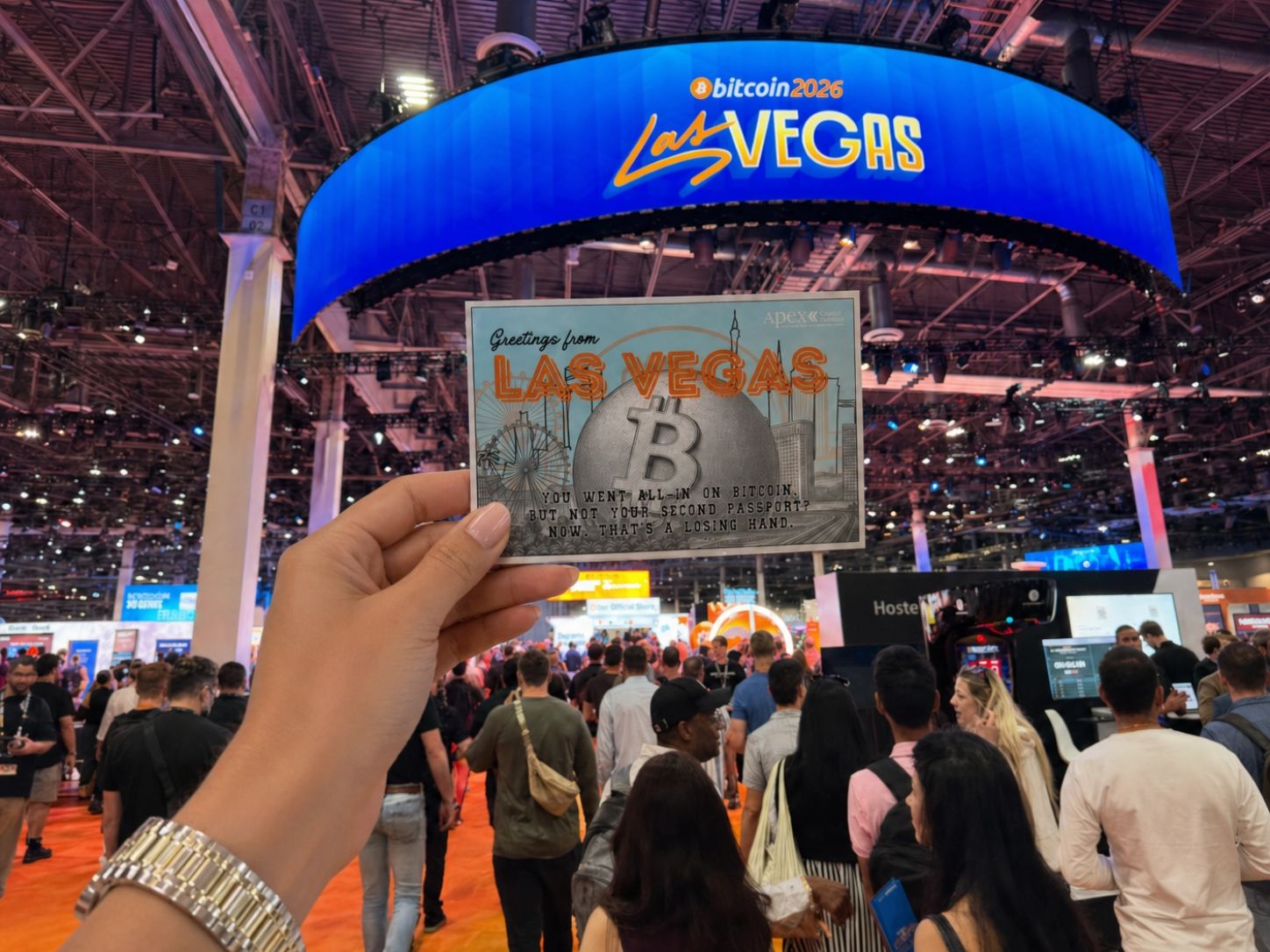
Yet amid all the bullish predictions and regulatory breakthroughs, one speaker challenged the room to think bigger. Nuri Katz, Founder and Managing Partner of Apex Capital Partners, stepped onto the Enterprise Stage and asked a question that stopped people in their tracks: What good is borderless money if you are trapped behind one border?
The Conference That Changed Everything
From the moment doors opened on Day 1, Bitcoin 2026 established itself as a watershed event. SEC Chairman Paul Atkins walked onto the stage and made history as the first sitting U.S. securities regulator to address a Bitcoin conference. In a fireside chat with Perianne Boring of The Digital Chamber, Atkins unveiled the agency's "ACT" strategy—Advance, Clarify, and Transform—and introduced "Project Crypto," a Commission-wide initiative to modernize securities rules and provide clear guidance on token issuance, custody, and trading. His appearance signaled, in no uncertain terms, that the era of regulation by enforcement had ended.

Equally significant, CFTC Chairman Mike Selig joined Atkins on stage to announce a coordinated regulatory reset favoring onshore crypto development. The two regulators appearing together at a Bitcoin event—something unimaginable even two years ago—sent shockwaves through the industry.
Meanwhile, FBI Director Kash Patel and Acting U.S. Attorney General Todd Blanche headlined a Day 1 session titled "Code is Free Speech: Ending the War on Bitcoin," reinforcing the administration's commitment to protecting developers and innovators from prosecution.
Bold Predictions and the Strategic Bitcoin Reserve
Day 2 brought even more firepower. White House Chief Cryptocurrency Advisor Patrick Witt took the stage and teased an impending "major announcement" about implementing the Strategic Bitcoin Reserve. He revealed that his team had spent months studying the legal mechanisms required to properly execute the plan and safeguard digital assets on the government's balance sheet. Senator Cynthia Lummis, who has championed the reserve legislation, reinforced the urgency of enshrining it into law before political winds shift.
The macroeconomic bulls delivered their cases with conviction. BitMEX Co-founder Arthur Hayes laid out a detailed thesis predicting Bitcoin would reach $125,000 by year-end. He pointed to $1.3 trillion in new bank lending capacity unlocked by the enhanced supplementary leverage ratio rule, combined with a defense budget increasing by 50% to $1.5 trillion, as the catalysts that would flood the system with liquidity. "The U.S. government will not cut spending," Hayes declared. "It will print money. And Bitcoin will absorb it."
Tim Draper, the legendary venture capitalist, delivered perhaps the most visceral warning of the conference. He told attendees they "should be scared" if they do not hold at least 6 months' worth of savings in Bitcoin. He urged every company to maintain a 5-15% Bitcoin treasury allocation to survive what he called a coming "cataclysmic" bank run. His message carried extra weight given his track record of early Bitcoin advocacy and his willingness to put his own capital behind his pPolymarket predictions
Eric Trump added political star power on Day 2, declaring the past six months "the best period" he had ever witnessed for cryptocurrency. He noted that holders are refusing to sell, making the asset increasingly scarce and valuable. His presence underscored the Trump family's deepening engagement with the Bitcoin ecosystem.
On Day 3, Jack Mallers—CEO of both Strike and Twenty One Capital—delivered a keynote on building "The Bitcoin Company." He argued that Bitcoin's live-on-chain proof of reserves gives it a structural advantage over gold as a reserve asset, and laid out a vision for financial services that goes far beyond simply stacking sats
Nuri Katz Takes the Enterprise Stage
Against this backdrop of financial optimism and institutional momentum, Nuri Katz delivered a keynote that cut against the grain—not to contradict the room, but to complete its logic.
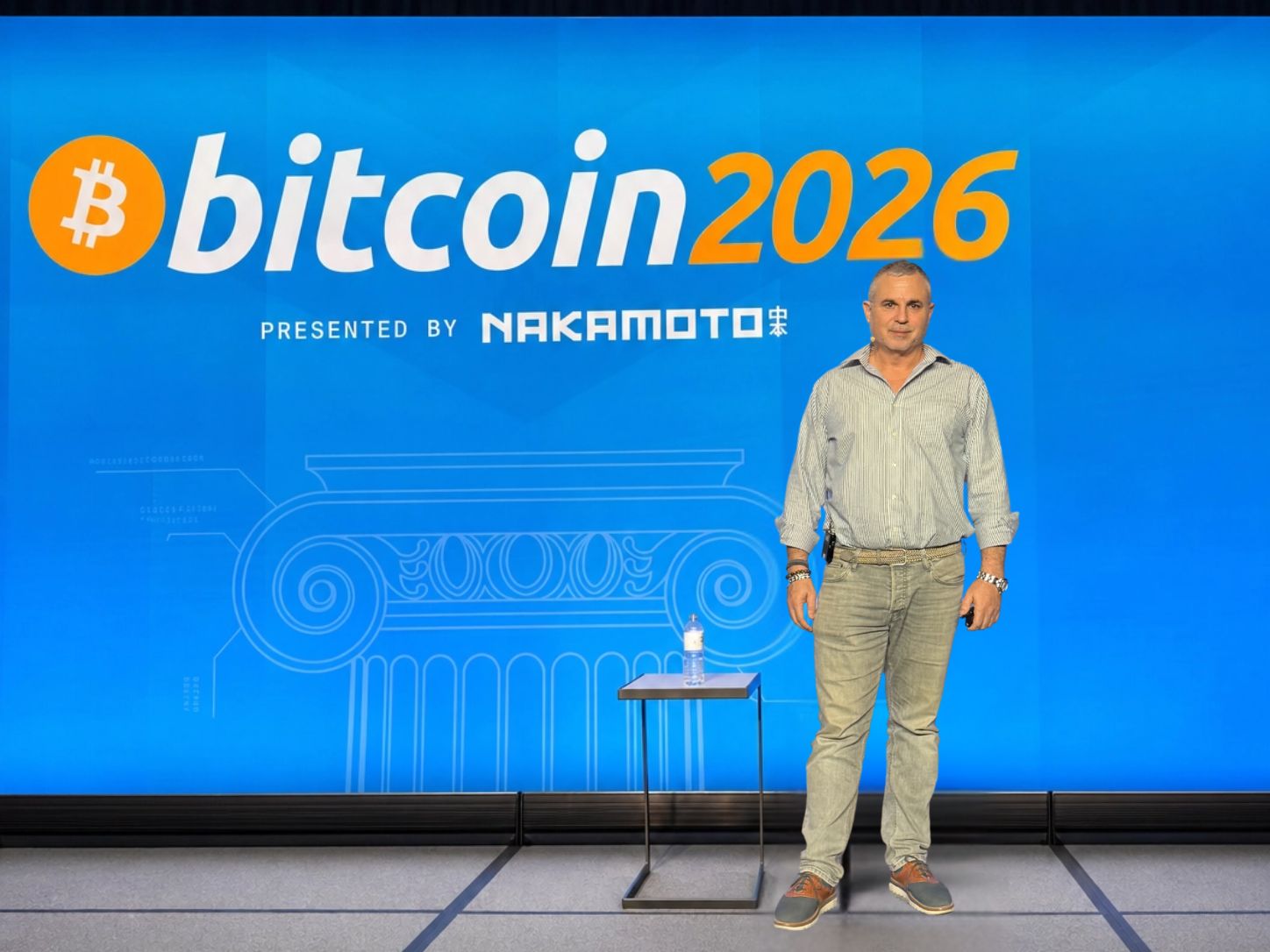
On April 28 at 3:25 PM, Katz walked onto the Enterprise Stage and let his title slide sit for a moment: "The Illusion of a Safe Haven: Why Financial Diversification is Failing the Modern Investor." The room went quiet. Everyone in that audience had spent years building conviction around Bitcoin as the ultimate hedge. Now someone was telling them their strategy had a hole in it.
Katz opened by validating the crowd. "We are all here because we believe in protecting our wealth from centralized failure," he said. "But what if the very concept of a 'haven' is incomplete?" He praised the audience for understanding the risk of concentration and for taking the bold step of decentralizing their wealth into non-sovereign assets. Then he delivered the pivot.
"You fixed your money," Katz told them. "You forgot your geography."
He explained that a decentralized portfolio cannot protect a centralized life. Bitcoin shields wealth from inflation, manipulation, and systemic collapse—but it cannot buy you a flight when borders close. It cannot grant you residency when domestic policies turn hostile. It cannot protect your family when a single government decides to restrict your movement.
Katz framed a single passport as the ultimate unhedged liability. He drew a direct parallel to financial concentration risk: just as no serious investor would put all their capital into one stock, no serious person should stake their entire freedom on one government's goodwill. Geopolitical instability and sudden policy shifts are the new normal, and freedom of movement is no longer a luxury—it is a critical defensive asset.
He closed with a framework that resonated deeply with the Bitcoin-native audience: Diversify your money. Diversify your options. Diversify your future. Second citizenship, he argued, is not about leaving. It is about having the power to choose.
Hosting the Fourth Turning Conversation
The themes Katz introduced in his keynote found even deeper exploration the day before, when he hosted a panel on the Genesis Stage titled "Life in a Fourth Turning: Rethinking Taxes, Passports & Exiting the System."
The 30-minute session on April 27 brought together a provocative group of thinkers: GMONEY from Rugpull Radio, Peymon Mottahedeh of Freedom Law School, and Nolan Bauerle of RoxomTV. Together, they examined how periods of major political and economic upheaval force individuals to rethink their relationship with institutions and the state fundamentally.
The panelists explored practical strategies for reclaiming personal sovereignty in an era where governments are simultaneously embracing Bitcoin and tightening control over citizens. They discussed how taxation frameworks are evolving, why geographic arbitrage is becoming a mainstream strategy rather than a fringe one, and how the concept of "exiting the system" no longer means going off-grid—it means building optionality across multiple jurisdictions.
Katz guided the conversation with the authority of someone who has spent 30 years navigating these exact challenges for ultra-high-net-worth clients and sovereign governments alike. His questions pushed the panelists beyond theory and into actionable territory, giving the audience a roadmap rather than just a manifesto.

The Street's Roundtable: CBI as the Bitcoin Freedom Solution
Katz's conference presence extended beyond the main stages. He also sat down with The Street's Roundtable for an in-depth interview exploring how citizenship by investment serves as one of the most practical solutions for Bitcoiners seeking true freedom. In the discussion, Katz broke down how CBI programs offer a direct, legal pathway for crypto-native investors to secure geographic optionality—turning the abstract concept of personal sovereignty into a concrete, actionable strategy. The interview reinforced a central theme of Apex's Bitcoin 2026 messaging: that the same investors who took early action on financial decentralization should apply that same forward-thinking logic to their personal lives and mobility.

The Apex Booth: Where Conversations Became Consultations
Throughout all three days, the Apex Capital Partners booth operated as a nerve center for investors ready to act on these ideas. Operating under the banner "Secure Global Freedom," the team engaged hundreds of attendees who arrived with a familiar realization: their financial Plan B needed a personal Plan B to match.
The booth's messaging struck a chord precisely because the audience already understood decentralization as a principle. They did not need convincing that concentration risk is dangerous—they needed someone to show them how to apply that logic beyond their portfolios. The Apex team offered exactly that: personalized consultations on investment migration, second citizenship pathways, corporate structuring across jurisdictions, and alternative investment opportunities in 14+ licensed jurisdictions worldwide.
Conversations ranged from Caribbean citizenship-by-investment programs in Antigua, St. Kitts, and Grenada, to European residency options in Portugal and Greece, to emerging opportunities in El Salvador. This country has positioned itself at the intersection of Bitcoin adoption and residency innovation. For many attendees, the booth represented the first time they connected their Bitcoin thesis to a concrete plan for geographic diversification.

What Bitcoin 2026 Proved—and What Comes Next
Bitcoin 2026 settled the debate on whether cryptocurrency belongs at the center of global finance. The presence of the SEC Chairman, the CFTC Chairman, White House advisors, and sitting senators made that abundantly clear. The Strategic Bitcoin Reserve is moving from executive order to implementation. Institutional adoption is accelerating at a pace that even the most optimistic forecasters did not predict three years ago. The regulatory clarity that the industry spent a decade demanding is finally arriving.
However, as Nuri Katz and the Apex Capital Partners team demonstrated across two stages and three days of booth conversations, financial security represents only half of the equation. The smartest investors in the room—the ones who recognized Bitcoin's value before the institutions arrived—are now recognizing that true resilience demands a holistic approach. They are not just diversifying their portfolios. They are diversifying their lives.
The conference proved that Bitcoin won the argument on financial decentralization. Now the next frontier beckons: personal sovereignty, geographic independence, and the freedom to choose. Apex Capital Partners stands ready to guide that journey—just as it has for over 5,000 clients across 30 years of navigating global risk.
For those who left The Venetian with a new understanding of what true diversification means, the conversation is just beginning.
To learn more about Apex Capital Partners' investment migration and global advisory services, visit apexcapitaladvisory.com or contact [email protected].